Machine screws are widely used fasteners designed to create strong, precise, and reliable connections in machinery, electronics, automotive components, appliances, industrial equipment, and many other assemblies.
Unlike self-tapping screws, machine screws are generally designed to work with a pre-threaded hole or matching nut. Their uniform threads and wide range of head styles make them suitable for applications where accuracy and dependable fastening are important.
What Are Machine Screws?
Machine screws are threaded fasteners typically manufactured with a consistent machine thread along the shaft. They are available in different diameters, lengths, thread pitches, head styles, drive types, materials, and finishes.
Depending on the application, machine screws can be used with nuts, washers, or internally threaded components.
Common Types of Machine Screws
Different head and drive configurations are available for different installation requirements.
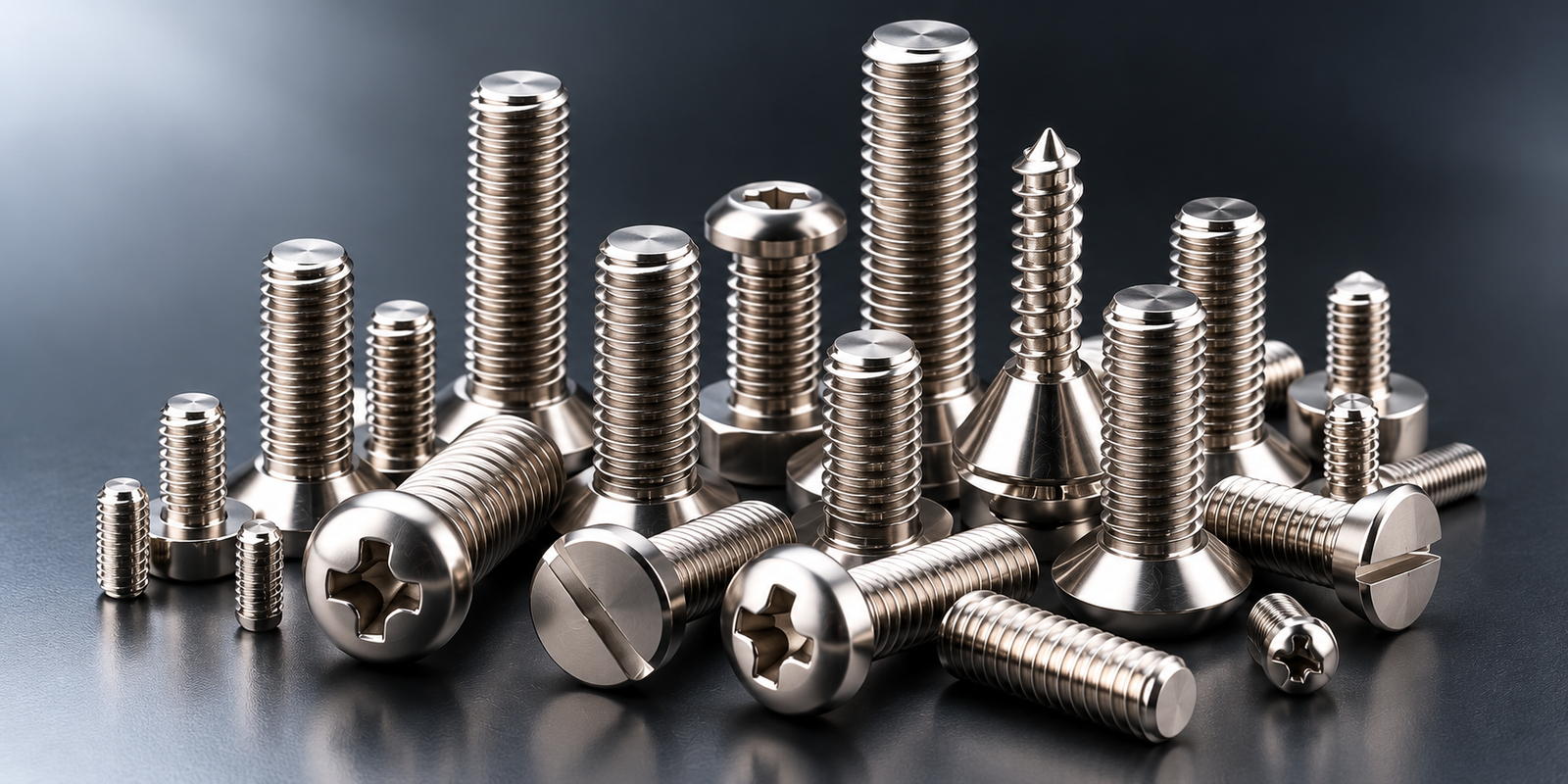
Pan Head Machine Screws have a slightly rounded head with a relatively large bearing surface and are commonly used in electronics, machinery and general assemblies.
Countersunk or Flat Head Machine Screws sit flush with the surface when installed in a countersunk hole, making them suitable where a smooth finished surface is required.
Round Head Machine Screws provide a raised, rounded appearance and can be used where the screw head does not need to sit flush.
Phillips Machine Screws use a cross-shaped drive that makes installation convenient with common screwdrivers and powered tools.
Slotted Machine Screws feature a traditional straight slot and can be installed using a flat-head screwdriver.
Materials Used for Machine Screws
Machine screws can be manufactured from materials such as stainless steel, carbon steel, alloy steel and brass, depending on the required strength, corrosion resistance, electrical properties and operating environment.
Stainless steel is particularly useful where corrosion resistance is important, while various steel grades and surface treatments can be selected for industrial applications requiring specific mechanical characteristics.
Where Are Machine Screws Used?
Machine screws are used across a broad range of industries, including automotive components, electrical and electronic equipment, industrial machinery, appliances, control panels, furniture hardware, manufacturing equipment and general engineering assemblies.
The correct screw depends on factors such as load, mating thread, environment, material being fastened and installation method.
How to Choose the Right Machine Screw
Before selecting a machine screw, consider the diameter, thread pitch, screw length, head style, drive type, material, strength requirements, finish/coating and operating environment.
The mating thread is especially important. The screw diameter and thread pitch must be compatible with the nut or threaded hole being used.
Why Quality Matters
Consistent dimensions, accurate threads and appropriate materials can improve assembly reliability and reduce installation problems. For manufacturers and industrial buyers, maintaining consistent specifications across production batches is particularly important.
Machine Screws from AG Fasteners
AG Fasteners provides fastening solutions for industrial and manufacturing applications. Machine screws can be supplied according to required specifications, materials, dimensions and applications, subject to manufacturing capabilities and availability.
For machine screw requirements, bulk orders or product specifications, customers can contact AG Fasteners for more information.
All engineering values, torque equations, and tensile specifications published by AG Fasteners conform to international fastener manufacturing standards (DIN, ISO 898-1, ASTM, JIS). When calculating critical joint safety margins or fatigue endurance under cyclic vibration, please consult our factory engineering desk or request material lot test certifications.